
Wisdom Teeth Removal

All About Tooth Extractions
In addition to wisdom teeth, other teeth in your mouth may need an extraction in some cases. However, we always look at tooth extraction as a last resort. If possible, we do whatever we can to save your tooth. Still, if there are certain indicators in your mouth, a tooth extraction could be your best option. Indicators such as:
- Pain (mild to severe and throbbing)
- Infection (around or inside of the tooth)
- Presence of cysts
- Tumors
- Crowding of adjacent teeth
- Gum diseases
- Tooth decay beyond repair
- Impacted canines or molars
Why Get Your Wisdom Teeth Removed
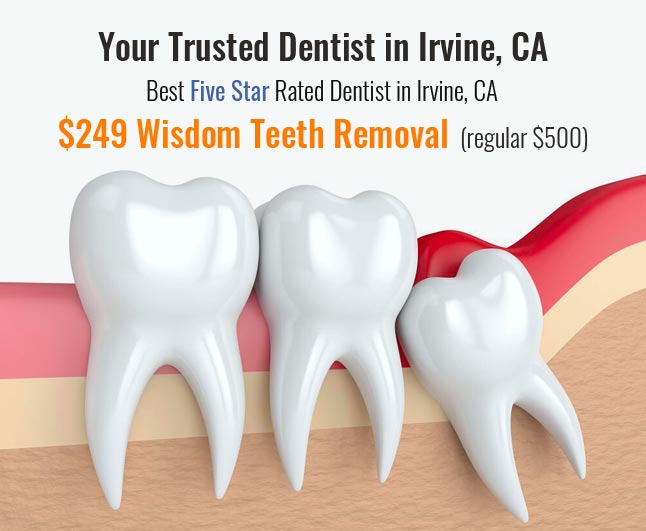
There are many reasons to warrant the removal of wisdom teeth. In many instances, the reason to take them out is preventative. Your wisdom teeth currently might not be painful, but it is better to remove them before they result in inevitable symptoms. Just because they don’t hurt now doesn’t mean that down the line other problems won’t arise. With imaging, your dentist can see the orientation of the teeth and provide predictions for how they can or cannot grow into your mouth. In some cases, the teeth may already be impacted, meaning they won’t grow past the jaw gumline. Instead, they just sit beneath your gums putting your other teeth and oral health at risk.
Other times, your exam may show us that your mouth will be too small for wisdom teeth. The teeth might still try to grow in, but they will compete with your other teeth for space. This can lead to alignment issues or potential future damage to nearby teeth if not addressed.
What Is Tooth Extraction Like?
You may be wondering if getting your wisdom teeth extracted or other teeth pulled is painful. With modern advancements in pain management, these dental procedures are generally entirely painless. For some cases, you may need only local anesthesia applied for you to stay comfortable. For more involved extractions, we may provide full sedation so that you are out for the entire procedure. In these cases, you will need someone to drive you home afterward.
In the extraction area, your dentist will use specialized dental tools to precisely and quickly remove the target tooth or teeth. If the tooth isn’t exposed, your surgeon will make an incision, then close it with stitches afterward. If the problem tooth is above the gum line, then a simple pulling procedure is used. We will let you know ahead of time about every factor for your treatment, so you aren’t in the dark about it from start to finish.
Suffering from
Dental Pain?
Get Relief Today
Call for Same-Day Emergency
Dental Appointment
949-789-8989 
My Tooth’s Extracted, Now What?
After a successful wisdom tooth removal surgery, it’s common to experience some discomfort for a couple of days. You may also experience some minor bleeding and swelling inside the mouth and jaw. However, this quickly stops, as the human mouth can heal itself quite quickly. Your oral surgeon will provide you with a detailed post-treatment plan for recovery with instructions for diet and home care. Most patients become symptom-free after a few days. If you have any questions while healing from a tooth extraction, call our office and we will provide and info and help that we can.
For general tooth extractions, there will be a gap now where your tooth once was. At dentist in Irvine, our office will provide a wide array of solutions for what’s best for you. Depending on your unique situation, many treatment options can be prescribed to get your smile back to its full glory and take care of your missing teeth. Treatments such as dental implants, dentures, and or bridges are all excellent ways to restore or rebuild a smile and get you looking your best.
Otherwise, for wisdom teeth removal, once you have healed you should be in better shape than before. Without impacted teeth to worry about, you minimize oral health risks such as infection or misaligned teeth.
Schedule Your Appointment Today
To get started on seeing if a tooth extraction or wisdom teeth removal in Irvine is right for you, call us today. Even if you do not have symptoms yet of impacted teeth, it is important to learn more about your wisdom teeth to prevent future problems and risks. We offer same-day emergency appointments if needed for when tooth extraction simply cannot wait. With many 5-star reviews, we will be able to help you like our other patients.
Frequently Asked Questions
Wisdom teeth do not always need to be removed. In fact, if your wisdom teeth are healthy and do not cause you any discomfort, you likely do not need an extraction. Cases when wisdom teeth are recommended to be removed include:
- Impacted wisdom teeth (completely hidden underneath the gum) often cause pain and gum irritation)
- Partially impacted wisdom teeth (partially hidden underneath the gumline)
- Infected or decayed wisdom teeth
- In preparation for an orthodontic treatment or to preserve the results of an orthodontic treatment
In the vast majority of cases, patients do not experience any sensations during tooth extraction or wisdom teeth removal. A local anesthetic that is administered before the procedure completely numbs the extraction area of your mouth. You might experience a slight stinging sensation when the anesthetic is injected into the gum, but it lasts only a couple of seconds. After the procedure, you are likely to experience mild soreness or swelling at the extraction site for 2 to 4 days. These symptoms can be managed with over-the-counter painkillers and gradually subside as the site heals.
Tooth extraction costs between $300 and $650 if you pay out of pocket. The final price depends on the complexity of your procedure; simple extractions cost less than surgical extractions of impacted or broken teeth. Additionally, tooth extraction is often covered by insurance, with coverage ranging from 50% to 80% of the total cost.
The two main types of tooth extraction complications are infections and dry socket. An infection can occur if your post-procedure care is insufficient or if you do not comply with your doctor’s recommendations, such as antibiotic prescriptions or checkup visits. Additionally, smoking and eating hard and crunchy foods can provoke infections at the procedure site. A dry socket (alveolar osteitis) occurs when the blood clot that forms in the socket immediately after extraction is dislodged. Alveolar osteitis may occur if you smoke, use straws for drinking, brush aggressively, eat crunchy foods, or engage in intense physical activities. In the vast majority of cases, complications after a tooth extraction can be avoided if you follow your doctor’s post-procedure care recommendations closely.
In the majority of cases, local anesthesia is used for tooth extractions and the removal of wisdom teeth. Typically, it is sufficient to block pain and any other sensations at the procedure site. Local anesthesia is administered via injection in the gum and takes effect within a couple of minutes.
In cases of complex surgical extractions, your dentist might recommend sedation, either in addition to or instead of local anesthesia. Additionally, people who experience acute dental anxiety or find it challenging to remain in the same position for the duration of the procedure might also consider conscious sedation. Sedation types commonly used in dental offices include oral, nitrous oxide, and IV sedation.
Many dental insurance plans cover wisdom teeth removals if they are considered a medical necessity. The amount of coverage often depends on the type of your insurance, deductibles, and yearly maximums. Additionally, we recommend that your dental office confirm coverage with your insurance company before making an appointment.
Recovery times vary depending on the complexity of the extraction and your body’s healing process. Most patients can return to work, school, and other normal activities within 24 to 48 hours after a simple extraction. Mild swelling and soreness usually improve within a few days. Complete healing of the gum tissue can take one to two weeks, while the underlying bone may take several months to fully heal. Following your dentist’s aftercare instructions can help ensure a smooth recovery.
For the first 24 hours after your extraction, it is best to stick to soft foods such as yogurt, applesauce, mashed potatoes, smoothies (without a straw), and soup that has cooled to a warm temperature. Avoid hard, crunchy, spicy, or chewy foods that may irritate the extraction site or dislodge the blood clot. As the area heals and discomfort subsides, you can gradually return to your normal diet. Your dentist will provide specific dietary recommendations based on your procedure and recovery progress.

HAPPY CLIENTS
I’ve been coming to this office for just under a year, and I have to say, I’ve never encountered a more caring and friendly staff.
Dr. Sharma is kind and also incredibly friendly, highly professional, and extremely competent. I can’t recommend this office enough!
Andi K.
We're
Proudly
Associated
With