
Dental Bridge
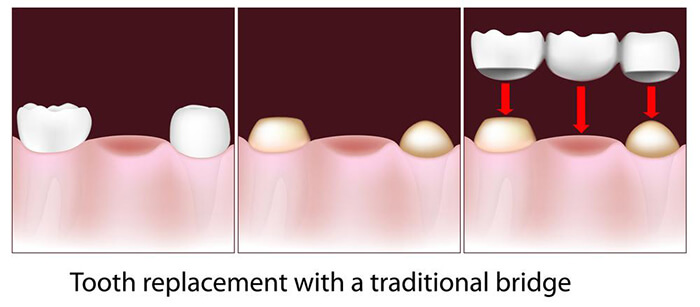
Table of Contents
ToggleRemovable Bridge
A removable dental bridge is a good solution to replace one or more missing teeth, most especially in more complex dental situations where other replacement options are not possible. Thus particular type of dental bridge is usually created with a tooth-colored artificial tooth which is combined with metal clasps that is hooked on the natural teeth beside or adjacent it. Removable bridges are the cheapest option for teeth replacement compared to fixed dental bridges, dentures, or dental implant. A removable bridge can also be least pleasing when it comes to the aesthetic part due to the metal clasps on the appliance that are often impossible to conceal.Fixed Bridge
Fixed dental bridges are made mostly of porcelain or composite and attached and cemented permanently to the patient’s natural teeth adjacent to the missing tooth area. The main advantage of this type of bridge is that it is fixed and is well-built. However, in order to create a fixed dental bridge, two healthy and natural teeth of the patient will have to be crowned to hold the bridge in place.Suffering from
Dental Pain?
Get Relief Today
Call for Same-Day Emergency
Dental Appointment
949-789-8989 
Dental Bridge Procedure
You need to visit your dentist a couple of times to receive your new dental bridge. During the first visit, your dentist drills away a small amount of tooth enamel to ensure there is enough space to place the device. He or she then takes an impression of your teeth and jaw and sends it to a dental laboratory. Your dentist fits you with a temporary porcelain bridge before you leave. You receive your permanent dental bridge during the second appointment. After using special dental cement to place it in your mouth, your dentist carefully checks the fit and performs any needed adjustments. Lastly, the dentist cements the new crown into place. Our dental specialists will provide you with detailed care instructions. There are many variables in determining the costs of dental bridges. Your dentist provides you with this information during your initial consultation. This is also the ideal time to inquire about our numerous dentistry payment options if dental insurance doesn’t cover your dental procedure.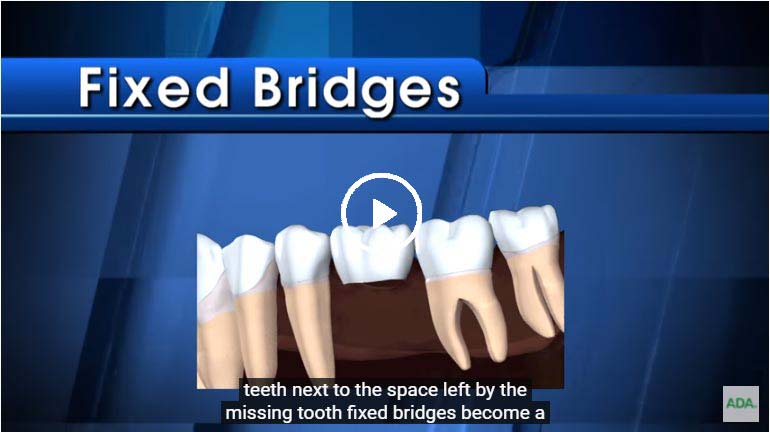
Frequently Asked Questions
The total cost of a dental bridge depends on the type of bridge, the materials used, and the number of teeth that need to be replaced. A traditional bridge costs from $2,000 to $5,000, a Maryland bridge costs between $1,500 and $2,500, and an implant-supported bridge can cost up to $15,000.
Dental bridges are suitable for people who are missing one or multiple teeth in a row and have healthy teeth on both sides of the gap to support the bridge. Additionally, it is recommended to treat or adequately control gum disease, if present, as it can weaken the bridge-supporting natural teeth, making the restoration less stable or more likely to fail. A good candidate for a dental bridge should be committed to maintaining effective oral hygiene to avoid decay in the bridge-supporting teeth and prevent gum disease.
Generally, dental bridges last 5 to 15 years, depending on the materials they are made of, your personal habits, and your oral health. For example, porcelain-fused-to-metal and all-porcelain bridges usually last 10 to 15 years, while gold or zirconia bridges can last 15 to 20 years. Maintaining good oral hygiene, avoiding hard foods, and using a nightguard if you grind your teeth can also prolong the lifespan of your bridge.
A dental bridge is fixed in the mouth, making it a more stable and comfortable solution than dentures. However, implants typically provide more stability than both dentures and dental bridges. Dental implants also prevent bone resorption, whereas bridges and dentures do not. That said, dental bridges can be a better solution for people who are unable to have dental implants due to oral or general health considerations.
You can get a dental bridge in two visits to a dental office. During the first visit, your doctor will make impressions or scans of your teeth. Then, you will wait for around 2 weeks for the bridge to be custom-made in a dental lab. However, the wait time can depend on how busy the lab is. During the second appointment, the bridge will be affixed in your mouth, ensuring it is comfortable when you talk and chew and that it aligns with your bite and the height of the rest of your teeth.
Dental bridges do not damage adjacent teeth. However, they rely on adjacent teeth for support, which increases the pressure on these teeth during chewing. This makes adjacent teeth more susceptible to caries and damage, so people with dental bridges should maintain good oral hygiene and have professional cleanings and checkups every 6 months.
To effectively care for a dental bridge, you need to clean around and underneath the bridge daily to prevent plaque and tartar accumulation. This way, you will avoid such issues as bad breath, unpleasant taste in the mouth, gum disease, and decay of the supporting teeth. It is recommended to use special floss threaders and water flossers to make the process convenient and effective.
Many insurance policies cover dental bridges as a major procedure. This means that your insurance will cover 40% to 50% of the cost. However, insurance coverage applies only if the bridge is considered a medical necessity.

HAPPY CLIENTS
I’ve been coming to this office for just under a year, and I have to say, I’ve never encountered a more caring and friendly staff.
Dr. Sharma is kind and also incredibly friendly, highly professional, and extremely competent. I can’t recommend this office enough!
Andi K.
We're
Proudly
Associated
With